• Over the decades, consumers have become more informed about the business of marketing and branding. They are now capable of comparative research and can survey their peers for buying recommendations instantly. They have become extremely sophisticated. And they know what they want.

    People now select brands, not products and services.

    They expect a brand to align with their values and stand for more than just a product or service. They want to feel good about their investment. They want to feel a connection. But most importantly, they know they have choices.

    That’s why, no matter how long you have been in business or how well you are doing, it is worth reviewing your brand and refocusing it to ensure you remain relevant. With this in mind, agencies like us have to rethink how we approach our craft. And thus, The Brand Roadmap emerged.

    We are embarking on a series of posts detailing our brand process. But before diving into this first step, we preface this by saying that before even beginning the development of a brand, we go through an extensive brand discovery process. We hold various types of workshops and meetings with clients to extract all of the thoughts, beliefs, motivations, and desires from them and use those insights throughout the following steps to bring their brand to life. More on Brand Discovery coming soon.

    The first step in our brand process is to develop a Brand Roadmap.

    The Brand Roadmap is made up of three seemingly-simple statements that provide direction and serve as reference points for the brand’s purpose and goals, as well as the entirety of the brand process to follow.

    These statements very directly and succinctly state what a company stands for and does. They are the Mission, Vision, and Position statements.

    The Mission:

    This is the most known and widely understood-yet-misunderstood deliverable in our process.

    Everyone knows what a Mission statement is, right? Maybe it’s printed and hanging somewhere in a company’s breakroom. Or it might be found on the About page of their website (or not?). Sadly, mission statements are often overly-verbose, technically written, vague and difficult to understand, and nearly impossible to commit to memory.

    The Vision:

    How about a Vision statement? Most people have heard of these.

    Is a Vision statement interchangeable with the Mission? Some think so. Or does it drive the mission statement? Or maybe it answers to it? We see all of these scenarios out there, but most seem to think it is something that should inspire. We can agree on that.

    The Position:

    Most companies we come across don’t have a positioning statement, nor a good grasp on its role or importance.

    The Position statement has definitely become a more important and known piece of the branding puzzle over the past decade or two but is rarely articulated and implemented. And it might just be the most important one of these three to help a brand succeed.

    Now we’ll break each of these down and show you how we’ve applied them to our own brand as a working example.

    Mission

    While it may be very difficult to identify for some companies, we have a very simple way of looking at this one.

    A brand’s Mission should answer the question, “Why do we exist other than to make money?”

    It’s all about taking revenue and balance sheets off the table. If you had an unlimited supply of money, why would your business keep doing its thing?

    After running a brand discovery workshop on ourselves, we decided that our mission is about the people we serve – our employees. Did you expect the people we serve to be our clients? We’ve flipped that thinking. We find that if we serve our team first, our team naturally wants to serve our customers. So there is bleed-over in our Mission and its directives from our staff members to our clientele.

    Our Mission is to:

    Develop leaders. Foster creativity. See around corners. Pass torches.

    It’s short. Intriguing. Easy to commit to memory. And easy to understand.

    Vision

    Now that we know what we mean by Mission – why a company exists – we look to the future. Vision is our roadmap for the future.

    A brand’s Vision should explain how its Mission will be achieved. 

    If your mission is properly crafted, it will be within reach, but never-ending. It is a journey, not a destination. And if your company has already achieved its mission, then your mission was too small.

    So, if Traction’s mission is seeking to develop leaders, foster creativity, see around corners, and pass torches… how can we go about living that?

    Our Vision:

    We break the mold in how we operate. This ensures the smartest and most humble creatives desire to work here, and the right-fit clients seek to hire us.

    For us, it’s all about attracting the right people to go on the mission with us. These people don’t subscribe to the thought that, to be successful, they need to fit in or step in line. We want mold breakers. People with enough curiosity and gumption to find new ways. And people who do that for the results it creates, not the attention it gets.

    Position

    This one’s a doozy, but it’s critical to get it right. It’s not a difficult concept to grasp. It’s just a difficult one to commit to.

    A Position defines a brand’s unique and strategic place in a market or its industry. 

    It is a declaration of what sets the brand apart from the competition. Branding is always about standing out, not blending in.

    While your Position is expressly articulating what your company does and for whom, it is also stating what you do not do and for whom you do not do it.

    When properly constructed, your positioning provides focus. A clear line of thinking about the customer you serve, what they need, and how you uniquely fulfill their needs. Ideally, in a way that reduces the number of competitors that could potentially also be a good fit.

    Tight positioning is all about filling a niché. And this scares the hell out of most businesses that aren’t well-positioned. They want to do everything they can for anyone they can. But the goal is to be very narrowly focused. Not because narrow is the goal. But because the path to deeper connections with the perfect customers is inherently narrow.

    Our Position:

    We move time-tested brands across generational chasms, in both company leadership and target markets. The intersection of both is where we do our best work.

    Who are we focused on? Brands that have been around the block. We call them time-tested. They often are already 2nd generation companies. But they don’t have to be. If we can find battle scars they’ve survived, we get excited.

    What do we do for them? We help them bridge the gaps between generations. Whether that’s a transition to a 2nd or 3rd generation of company leadership or a big shift in the generation of customers they need to acquire. We are their change agents.

    And that’s the Brand Roadmap – our first big step in developing a brand. These are your simplest and truest of statements. Three statements that embody exactly what your brand is and does.

    We help a company figure out and cement why it exists, we make sure they know how they can work collectively toward their future desired state of existence. Then we focus on what makes them special at what they do and for whom they should strive to resonate.

    The next post in this series will address the second step in our brand development process – Brand Values. These are the attributes and characteristics which serve as the foundation from which all other elements of the brand will take shape.

    Interested in talking with us about how we can help your company re-envision its brand? We’re always eager to talk with new people about just that. Let’s chat about possibilities.

  • In our recent post, The Brand Roadmap, we used our own mission, vision, and position statements to help illustrate and give context to how each can work together to articulate your brand’s why (mission), how (vision), what, and whom (position).

    We’re going to be super honest here: creating those for ourselves was much harder than crafting them for a client. 

    It was a mix of intimidating introspection and striving for perfection. So what do we do in a time like this? We settle! Sometimes done is better than perfect. And we can always re-approach and re-shape these every few years to make sure they still ring true for us.

    Thinking back, coming up with the mission statement was the hardest of the three. For well over two years, it felt impossible. There’s logic to that. It is because it had to come first. A mission is the genesis of your brand. It will provide direction for the entirety of the brand process to follow. 

    So what we wanted to do with this post is document—right here for the whole world to see (and to help keep us accountable)—what those four short sentences that declare our mission really mean to us.

    Develop leaders. Foster creativity. See around corners. Pass torches.

    Pro Tip: Notice that each of those is an imperative sentence. Beginning each with a verb coaxes readers to use their powers of imagination and deductive reasoning. They give instruction to the reader. That’s a great formula to follow for mission statements. Because a mission is something you actively do. Something you go on. So make it actionable!

    Develop leaders.

    We are setting out to be a team made up of only leaders. This leaves no room for followers.

    At Traction, we give our team members all the authority and autonomy they can handle. And when people get stuck, we jump in to help lead them. We lead each other.

    We also set out to lead our clients squarely into the future.

    Leaders concern themselves about what lies ahead, known or unknown. Because our goal is to take our clients into Brand New Territory.

    Foster creativity.

    We believe in promoting the growth and development of our creativity and the endeavors it leads us to.

    Whether professional or personal, we see creativity as fundamental to living a meaningful life, solving complex problems, and making an impression on the world. Our culture and work environment are designed and intended to house and nurture creative thinking.

    See around corners.

    We always keep our eyes focused just beyond what’s next.

    It is our job to see into the future, plan and be ready for it, and educate our clients on it. We prefer to live just ahead of the curve.

    Pass torches.

    We empower and grow each other by sharing knowledge and dishing out opportunity. 

    If knowledge is power, then help make our team powerful. If opportunity is key to success, then help make one another successful.

    That’s it. Those are our simplest and truest of statements. Four short sentences that embody exactly why Traction exists. They may have been nearly impossible to write, but they are easier to write than to realize. Now we’re on a mission to make that happen.

    Are you on an impossible mission to make your brand crystal clear and relevant? Hit us up. We’d love to see how we can help.

  • A huge part of having a brand is how your company lives the brand. And a big reason people develop an affinity for a brand is that they intuit ideas or values in the brand that they also share. And the only reason people stick with a brand is that they feel the brand delivers what it promises.

    These ideas or values can be found among the indistinct attributes of your company culture. The most authentic of these attributes are brought to light, then honed and refined to sharp clarity.

    Consumers today select brands, not products and services. And they are experts at spotting a brand that’s all smoke and mirrors or the real deal. While the Brand Roadmap reveals paths for exploration during our brand process, it is the values and ideals your company embodies that are essential to an authentic brand.

    The second step in our brand process is to establish the brand’s Core Values.

    Core Values, which we distill into Principles, Personality, and Promise, are the foundation of the brand from which all other elements will take shape.

    Because what we value determines what we become.

    Following our brand discovery workshop, attributes, characteristics, values, and aspirations are synthesized. Our analysis guides us toward those with the strongest potential and uniqueness. This sets you up for success because nobody is better at being you than you.

    Principles:

    A company’s Principles are its true character. These are the distinctive and internalized qualities that emerge when nobody is watching.

    Personality:

    A brand’s Personality consists of the qualities and attributes it projects to the public. This is how the world sees you.

    Promise:

    The Promise is the synthesis of a brand’s Principles and Personality attributes. It is the core value that serves as the genesis for the entirety of the brand platform.

    Now we’ll break each of these down and show you how we’ve applied them to our own brand as a working example.

    Our Principles:

    Authenticity + Drive + Loyalty

    We are very much a what you see is what you get group of people at Traction, and we operate under a come as you are philosophy. We don’t switch modes when we move from working independently to working collaboratively to making a client pitch to meeting with a potential new client. To us, that feels authentic to who we really are rather than trying to be something we’re not.

    We are driven. It is hard to succeed in this industry riddled with deadlines and timelines without leaning far forward. We’re driven to produce stellar work. Driven to produce measurable results. We’re driven by the idea that we and our clients are accountable to each other. We are driven in the pursuit of creative excellence and creating something original in a carbon-copy era.

    Our loyalty is first and foremost to each other, then to our craft, clients, and community. We place a high value on loyalty. And we reciprocate loyalty every chance we get.

    Our Personality:

    Relaxed + Creative + Technical

    Like a duck, we may be working crazy hard just under the surface, but always strive to remain free of chaos, anxiety, and stress in how we handle ourselves outwardly. This mellow approach to work flies in the face of the “hustle” culture that breeds burnout and is endemic to our industry.

    When it comes to creativity, it’s not what we do… it’s who we are. No matter one’s position in our company, work can always be approached creatively. It’s about using one’s intellect, life experiences, and dreams to problem solve.

    Paradoxically, we don’t just go freestyle creative all over the place. Our work is meticulous, conscientious, precise, and exact. We see beauty in order and structure equally to color and form. We stretch ourselves, oftentimes not to break outside the box, but to create something new and fresh within the boxes we often must work within. Specifications, parameters, guidelines – they serve our creativity, not the other way around.

    Our Promise:

    Creative, objective-driven approaches to business problems in need of being solved.

    Our promise is our default mode of operation. It is easily kept because it aligns with our principles and personality. There is a reason behind each decision and move we make. Is it creative? Does it contribute to meeting an objective rather than just being subjective? Does it solve a business problem? And did that problem need a solution?

    And there you have it. Our brand’s core values describe how we approach our work and what we always deliver for our clients.

    On that note, if you have a business problem that you think needs to be solved, and would like a creative solution, then you’re speaking our language. We’d love to connect and talk shop. Let’s meet sometime?

  • If you aren’t moving forward, you are moving backward.

    This simple phrase embodies one of the most challenging concepts for multi-generational businesses. How do we know? We are one.

    We’ve been fortunate to have worked with a number of clients through multiple generations of leadership. Through all of that, we learned a thing:

    Moving brands forward requires friction.

    We discovered that we feel most effective in this space. Because over the last 45 years, we’ve lived it. We’ve navigated it. And we liked it.  

    We’ve survived more than fifteen years into our second generation of ownership and more industry shifts in that time than we care to count. Those experiences have made us uniquely suited to help move time-tested brands—like us—across generational chasms of company leadership and target markets.

    We’ve remained relevant while ensuring our clients do, too.

    Defining Multi-Generational Businesses

    By our definition, multi-generational businesses are not only the family businesses passed on from one generation to the next, aiming to retain relevance over time. It’s also legacy businesses wanting to successfully advance their operations into the future, and adapt business strategies or products to changing demands as new generations of consumers flood their market space.

    Multi-generational businesses have inherent strengths, including pride in the legacy, a long-term focus, institutional knowledge, and strong relationships inside and outside the company. They tend to embrace strategies that put customers and employees first and emphasize social responsibility. In fact, studies show that these businesses have fewer human resources problems and stronger values, driving new entrepreneurial activity.

    Multi-generational businesses also practice good governance and oversight, as family business leaders focus on the next generation, not the next quarter. Recent research has shown that continued family control can be efficient because it can positively affect the long-term perspective and allows for unique strategic positioning.

    But within these strengths can lurk problems. There are often differences in opinion between the generations about how and why things should be done. Or not done. But it also brings a multitude of opportunities to learn from each other and strengthen the company as a whole. With the strengths of many generations focused on the common goal of succeeding, multi-generational businesses have resilience and staying power.

    The Fear Factor

    Those at the helm of a generational business carry more responsibility than just a healthy bottom line. They are stewards of a legacy.

    While shouldering this responsibility, the idea of breaking apart time-proven structures to ready the company for the future can appear to carry a higher risk.

    However, companies that thrive across multiple generations are rarely the same businesses as when they were founded. Those that thrive have adapted, evolved, and responded to new demands without losing their identity. That means it is vital to examine established brands and critically evaluate what course changes, while scary to some, would be worthwhile. 

    That’s where we come in.

    As the torch is passed, we help clients navigate and span gaps between generations—both internally among leadership, and externally with future consumers. It’s a process of engaging new people with new-to-them brands. And this overture must be done without losing the momentum or the equity and tradition already in place.

    Embrace A Strategic Vision While Allowing Disruption

    A clear strategic vision for multi-generational businesses is the driver of growth and performance. This is how you develop a company for the ages.

    It seems everything has been said about the generations currently ruling consumer behaviors and the workforce alike. Boomers feuding with Millennials, Gen Xers frustrated, sandwiched between the two, and a new powerful force creeping up unnoticed as Gen Z comes of age. The reality is more nuanced and complex, and quite a bit more positive.

    Each generation is shaped by events and experiences that dominated their world while growing up. As a result, each has different expectations and motivations, consumer behaviors, and ideas about running a business and interacting with consumers. Communication styles and preferences keep evolving. All these elements can create challenges in how people relate and work together.

    In today’s fluid business landscape, gaps between generations are growing wider while changing faster. What was once a narrow gap is now a deep chasm packed with misinformation, media-influenced assumptions, and ethnographical nuance. Clearly a challenge. But not an insurmountable obstacle.

    Wondering why you need friction to move a brand forward?

    Because friction is required to gain traction.

    Hence, our company name. We do not shy away from friction in order to get you traction. We embrace it. Without traction, we cannot move our company, or our clients’ companies, forward into uncharted territory.

    There is inherent friction in change. And change can be arduous for companies to implement. It can be difficult to adapt to new attitudes and mindsets. Adopt new processes. Discard what no longer is relevant. Create new traditions.

    Leading Your Brand Into the Unknown

    If you only focus on the comforts of the present, the future will remain indistinct. Our focus is on your past, present, and future.

    We respect and value the contributions of each generation in this process. We honor your business’ heritage but champion innovation to assure your brand remains relevant to upcoming generations. 

    Approaching branding and marketing this way—really business as a whole—requires thoughtful implementation. It means looking at who your customers are or should be. Insights about current customers, combined data, and demographics lead you to where you’ll find and attract your future customers. And it’s where you own your space, compete less, sell more, and amplify profitability.

    We call that place Brand New Territoryº.

    If this is where you want to be headed, we should get together. We’d love to connect and share our vision.

  • Companies typically need more help repositioning than they do positioning. 

    We previously discussed in our post, The Brand Roadmap, that a brand’s Position is its unique and strategic place in a market or its industry.

    The act of actively working on or toward your position is called positioning. Simple! You declare the niché you plan to occupy, articulate it in as few words as possible, and slap it on your website. Right?

    Here’s what makes it not so simple.

    We rarely work on positioning for a brand new company that can simply point to a spot and begin there. More often, companies have a history of products or services they’ve offered. Existing clientele they’ve worked with. Loads of brand messages floating around. A track record of success. And a history of expectations they constantly strive to meet. And a reputation that, if tarnished,  leaves a lot of equity behind.

    Turning on a dime might be possible, but immediately arriving at a new position does not happen overnight. Instead of having a eureka moment, repositioning is more likely an effort requiring inquiry, strategy, and a plan to arrive and occupy a new space.

    And since we are focused on multi-generation businesses, we’d rather be repositioning anyway. Part of what we love doing is building incrementally on top of what already exists (brand equity). It’s more of a challenge and requires a unique mix of strategic and creative thinking.

    Why and when to reposition a brand?

    Historically, repositioning a brand or product offering is triggered by one or even a few of a shortlist of reasons.

    • Maybe the brand is experiencing a measurable decline in interest or sales.
    • Or a new similarly-positioned competitive brand is taking market share.
    • Sometimes a big shift occurs within an industry or market, creating or eliminating opportunity.
    • It could even come from within when, for example, your company comes out with a new, superior product or service. 
    • Finally, it is a way to generate a pivot point in a company’s history, requiring new energy and a new trajectory toward the future.

    In all of these scenarios, the work is not done simply by declaring your new positioning. Like branding, positioning is a continuous effort, seeking to shape and mold people’s perceptions about your brand. It is not a one-and-done proposition. It needs to bleed into everything you do to market your company.

    Because we have worked with many multi-generation businesses, the arrival of a new generation of leadership has been a major focus for our repositioning efforts. These moments happen rarely and offer the perfect opportunity to take a big leap in positioning toward a more invigorated and profitable company future.

    Branding and marketing have become more sophisticated over the last few decades. More brands “get it” and are doing a better job at it. If you also take into account how today’s consumers select brands to engage with, one thing becomes clear:

    A company with too broad of a position is actually a brand for very few.

    Most people want a brand they can relate to. This means you need to be comfortable with many people NOT relating to you.

    Repositioning, when done right, is going to feel risky. If it doesn’t, then you may not be narrowing your position enough. Your brand will remain watered down and won’t resonate with the target audience you most want.

    How we go about repositioning a brand.

    Positioning is more often an externally motivated exercise focused on your public image.

    So, we don’t immediately pull out our full brand strategy toolkit. But certain aspects of your positioning, especially if they don’t already exist, need to be audited for relevancy and reworked.

    Mission

    Your brand’s mission statement should be something your employees know, understand, and believe in. This is why your company exists, so it is integral to your brand’s positioning.

    Vision

    Your vision statement also needs to be reviewed, as it describes how your mission will be accomplished. A repositioning might affect this and require a new aspirational vision to be cast and shared within your company.

    Core Values

    Your brand’s Core Values also play an important role in positioning. They directly project your outward brand identity and are critical in making your brand relatable to your future customers.

    Brand Discovery

    A brand discovery workshop with your organization is time well spent. It will assure that you’ve checked the boxes for mission, vision, and core values. We also want to hear from key stakeholders in the brand to achieve full buy-in from the top levels down through the ranks.

    Market Analysis

    At this point, we conduct market analysis to better understand your current brand position and how repositioning may be beneficial in differentiating your company from others that are already well-positioned in your market space. Generating a perceptual map makes this easy to understand and clearly shows where opportunities lie.

    Competitive Analysis

    We study your competitors to identify the conditions of the marketplace and the strength of influence each competitor exerts on your desired target market.

    Positioning Strategy

    Finally, it’s time to do the hard part. We work through a number of steps internally to develop a positioning strategy that perfectly sets you apart from all others. The end goal is to bring your organization together – narrowly focused on the consumers you truly desire and how you can uniquely meet their needs.

    Position Deliverables

    Once the new positioning is agreed upon, then begins the process of communicating it in various formats and mediums. This involves recalibrating brand messaging toward the new brand position. Repositioning requires brand realignment. Additional opportunities to express the brand’s new position certainly exist. Our team will explore these for further development.

    Where does it all end?

    The end result is a brand realignment with crystal clarity so your employees can jump on board, and your current and future customers can follow.

    Consumers are drawn to brands that have a purpose. This drawing power does not happen accidentally. It is the result of intentional decisions that reposition your brand more narrowly to better resonate with the people who will most identify with your brand.

    Sound like something your brand is in need of? We’re here to help. We’ve done it for other brands, as well as our own, and would love to discuss doing it for you.

  • Diversity is a driver of innovation. In as much as innovation is a key element of long-term business success, innovative leaders need to be able to communicate their business vision, as well as, be able to generate enthusiasm for it.

    Team members must be on the same page and be willing to invest their time and resources in making it happen. And while this seems like a no-brainer in theory, when it comes to putting this idea into practice, business owners can find it’s easier said than done.

    As marketers, we understand the influences, priorities, and attitudes latent in buying behavior. We continually observe and study how consumers make their decisions and factor those insights into the organizational makeup of multi-generational businesses.

    And as a multi-generation business ourselves, we recognize just how significant the contributions of each generation are to future-proofing your company. None of this happens without relentless reassessment and embracing change to remain relevant to the needs of the companies we serve. To dive deeper into this, we first must examine the motivating factors that make each generation unique in today’s marketplace.

    Today’s Generations

    In 2019, approximately 157 million people were employed in the United States. An additional two million employees will join the workforce in 2022. These millions of employees span in age from just-out-of-school to nearing retirement. The broad age and demographic spectrum of business cohorts certainly impact the way we manage a business.

    Among the 159 million-strong workforce is the Silent Generation – 23 million people born in the years between 1928-45. They still wield influence as founders in organizational structure, but they are mostly retired from the workforce. This brings us to the top generational level of today’s workforce: the Boomers.

    Boomers

    Born between 1946-64, the Baby Boomer generation is currently in their late fifties, sixties, and early seventies. Their work ethic is legendary, and they have forged a legacy redefining traditional values. Their definition of hard work often centers on visibility and long hours. They prefer structure and discipline and are less inclined to welcome change. Given how large this generation is, they still strongly influence today’s workplace culture.

    Baby Boomers own more than two million small businesses in the U.S. and employ more than 25 million people. Many are at a crossroads. Will they be selling their business, passing it on to a successor, or sticking around in some capacity? One thing is certain: they are ready to pass on the workload and stresses they’ve been carrying.

    As consumers, Boomers are loyal customers. Of all the generations, they wield the most disposable income and spending power and enjoy spending it on their diverse interests. Segmenting Boomers by age alone is a mistake made by some marketers, and even more so by younger generations. Compared to younger generations, Boomers have vastly different expectations and goals regarding lifestyle choices. They vary significantly in how they plan to retire. Some have no plan, little savings, and only vague ideas of what retirement will be like. Other Boomers have carefully planned and well funded their retirement. Therefore, it is crucial to pay close attention to each segment’s interests and motivations.

    Gen X

    Generation X, born between 1965-80, is currently in its forties and early fifties. That means that most Gen Xers have at least 20 years of work experience and look forward to assuming leadership and its challenges as Baby Boomers retire. Some Gen Xers are more than ready. They are frustrated as Boomers delay retirement, while Millennials aim to take on more significant responsibilities earlier.

    Their position – sandwiched between the Boomers and Millennials – has shaped how they work and lead others. They are good communicators and are invaluable in supporting both Boomers and Millennials. They value education and technology and thrive on clear goals and deliverables. They are independent thinkers.

    As a generation, they invented the idea of a work/life balance, flex time, and similar concepts. They want to feel like they contribute to something worthwhile professionally. As consumers, they appreciate human contact. They engage in personal relationships with retailers and service providers.

    Gen Y (Millennials)

    The Millennial generation has come of age. Born between 1981-96, Millennials are now the dominant generation in our workforce and are even more prevalent as consumers.

    Millennials are currently in their late twenties and thirties and have significant economic strength. They also exert significant influence upon business leadership by virtue of their innovative approach to the workplace environment and dissatisfaction with the status quo.

    Millennials’ contributions in terms of technology use and adoption are well known. But they also changed how consumers buy products and relate to brands. Millennials want a relationship with the brand and gravitate to those brands that align with their own personal values. Moreover, their access to technology allows them to stay connected. This empowers Millennials to find the best price for a product while also evaluating levels of product quality. They earned their reputation as the “mall killers,” demanding quality and value over quantity and low prices.

    Just as they have high expectations of brands, they also have high expectations of their employers. They demand flexibility, work/life balance, and a sense of purpose and fulfillment in their job. The latter has sometimes put them onto a collision course with older generations. Having firsthand experience with debt and financial instability from their experiences during the Great Recession, Millennials are saving for retirement earlier than any other generation.

    Gen Z (Zoomers)

    While much has been written about Millennials, when it comes to forcing change in the marketplace, the relative youngsters of Generation Z are now the ones to watch.

    Gen Z, colloquially known as Zoomers, has never known a world without total digital integration. Born between 1997-2012, they are currently in their pre-teens, teens, and early twenties. Many are born entrepreneurs, often starting businesses through digital channels in their teens.

    Incredibly self-motivated, Gen Z works hard but expects a lot in return. The integration of flexibility, convenience, and technology tools in their work setting are just a few standards they view as baseline demands. And they don’t understand when their environment doesn’t embrace these expectations. They are also an activist generation, willing to level their digital prowess, buying power, and voice against brands if they don’t align with their values. They are young but influential.

    Zoomers’ lives were interrupted more than any other generation by the Covid-19 pandemic. They are a generation forced to learn online. They’ve celebrated life’s milestones such as graduations and weddings remotely, distanced, masked, or not at all. The impact of this is undeniable, and the next few years will reveal just how deeply the pandemic has shaped their attitudes and beliefs about their futures.

    Clash of the Generations?

    Moving past perceptions and harvesting the power that each generation brings is one of the most challenging issues, given today’s media climate that champions pitting groups against each other.

    As we carved out our brand positioning and settled on the goal of helping multi-generational companies navigate the future, we did so believing that it is not only achievable but is key to future-proofing brands.

    For marketers, a focus on individualized customization and personalization is the future. Knowing customer segments is critical to understanding how to reach and influence people across multiple platforms. All marketers must span social media, digital media, traditional media, and other non-traditional mediums. The seamless transition from one to another offers businesses the ability to reach consumers across multiple generations.

    This idea of bridging multiple generations is the same for strategic business planning as well as for bringing time-tested brands into the future.

    Every generation brings a different set of skills to the table, and more often than not, they complement each other. Generational diversity drives innovation. Skill diversity pushes us all forward, because a diverse set of experiences, perspectives, and backgrounds are essential for the development of new ideas.

    How Generational Diversity Makes You Stronger

    Without a doubt, the defining characteristics of the four influential generations create friction at times. The good news? If all embrace how the organization can benefit from generational differences, the friction can lead to forward-moving traction.

    Vive la difference! Mature talent can share their knowledge and experience with younger generations. Young talent can help bring older generations up-to-speed with technology and digital platforms. The diversity leads to the transfer of crucial skills and institutional knowledge – both vital for the strategic planning of any organization.

    Research also shows both older and younger employees are more productive in companies with multi-generational work teams. Generational diversity can improve organizational performance and potentially even reduce employee turnover. We go so far as to believe that an intentional distribution of generations in your company gives you a competitive advantage. As a business, you rarely ever cater to just one audience. So, having multiple generations on staff gives your company a broader, more articulated internal perspective. Cross-generational representation is also attractive for potential customers and future employees alike.

    More in Common Than You Think?

    It comes down to this: we are all influenced by different life experiences and have adapted our views of how we think an organization can be most productive and effective. It is important to remember, however, that we generally have the same goal. You would like to see your business, brand, and organization thrive.

    We take great pride in having a role in this for our clients.

    Research tells us that all generations share the following expectations – even though they may interpret them differently.

    • Importance of family
    • A healthy work/life balance
    • A feeling of appreciation
    • The desire for effective leadership
    • Flexibility within structure
    • Desire to have a voice
    • Involvement in decision-making
    • A sense of purpose in work
    • Financial reward

    And perhaps most importantly:

    • A dislike for stereotypical perceptions of one’s generation

    The most significant difference is that generations see different paths to achieving those goals.

    At Traction, we find ourselves in the unique position of having four very different generations in the workplace catering to up to six generations of consumers. Each generation has its unique skillset, beliefs, and competencies to bring to the table.

    Together we can lead organizations to unprecedented heights. Thanks to the diverse ways of thinking about work and life in general, each generation is a source of new approaches and perspectives (and, yes, challenges).

    If you are looking for creative solutions to harness the generational power within your business, please reach out to us. We love meeting business leaders facing these challenges who want to turn them into opportunities.

  • Imagine you could zoom out from your industry, line up all the brands that make it up and look for similarities in how they present themselves. Would you see a dominant use of certain colors? Common shapes or symbols? Is there an affinity for certain types of fonts or sameness in the tone of voice?

    Most industries suffer from carbon-copy approaches to brand identity design. Some more than others.

    We see two reasons this is so prevalent:

    1. Most companies that direct their own brand identity design go for the most obvious elements in which to make it immediately identifiable
    2. Most brand identity designs draw from within the industry and its subject matter for inspiration

    Is a derivative design always weak? Is it bad for a brand to visually reflect its industry?

    No, not if done right.

    Is drawing inspiration only from within your own industry always bad?

    Yes, we feel it is.

    So, how do we approach brand identity design so that we don’t land our clients in the rut their industry has already carved?

    Enter: the Brand Parallel.

    The brand parallel is an exercise we developed to get us beyond the mundane, overused tropes of a client’s industry and to draw inspiration from other well-executed brands. Once we tried it, we saw how effective it was in focusing our team on a common point on the horizon that helps the brand stand out instead of blend in. We were hooked.

    Here’s how we do it.

    After developing a company’s Brand Roadmap and identifying and articulating its Core Values, we are ready to start getting creative with the other side of our brains. By this time, we have done the competitor research to differentiate our client and will have done the groundwork to begin crafting a unique brand personality.

    But instead of going further down that track, we stop and intentionally set out on a new parallel path to examine other industries sharing similar characteristics with our client’s brand, but that are in completely different industry verticals. We survey brands analogous to our client – not necessarily the industries they represent.

    Once we’ve zeroed in on a suitable brand parallel, we dive deep into it, completely unburdened from worrying about heavy-handed “inspiration” dampening our free exploration. We are free to adopt ideas from the parallel… because it’s been said “good artists borrow, but great artists steal”—right?

    Sidebar – this is a favorite quote of Steve Jobs in which he misquoted Pablo Picasso who said “Lesser artists borrow; great artists steal.” Picasso himself was paraphrasing composer Igor Stravinsky, yet both statements likely were taken from T. S. Eliot’s dictum: “Immature poets imitate; mature poets steal; bad poets deface what they take, and good poets make it into something better, or at least something different. The good poet welds his theft into a whole of feeling which is unique, utterly different than that from which it is torn.”

    Pretty interesting how this series of quotes are themselves an example of great artists stealing. How’s that for meta?

    The ultimate purpose of the Brand Parallel is to creatively inform and speak to the brand’s visual elements, including logo, colors, typography, photography styling, etc, as well as non-visual elements such as the brand’s tone of voice and the Brand Expression (tagline or slogan) and Brand Essence (core brand message).

    Examples of real-world Brand Parallels.

    Since brand identity design is mostly a visual exercise, there’s no better way to explain brand parallels than to show you a few examples from our brand development efforts for clients.

    Air Tractor, a 30+ year client, designs and manufactures purpose-built airplanes for multiple industries – agriculture, firefighting, surveillance & reconnaissance, narco-crop eradication, and military.

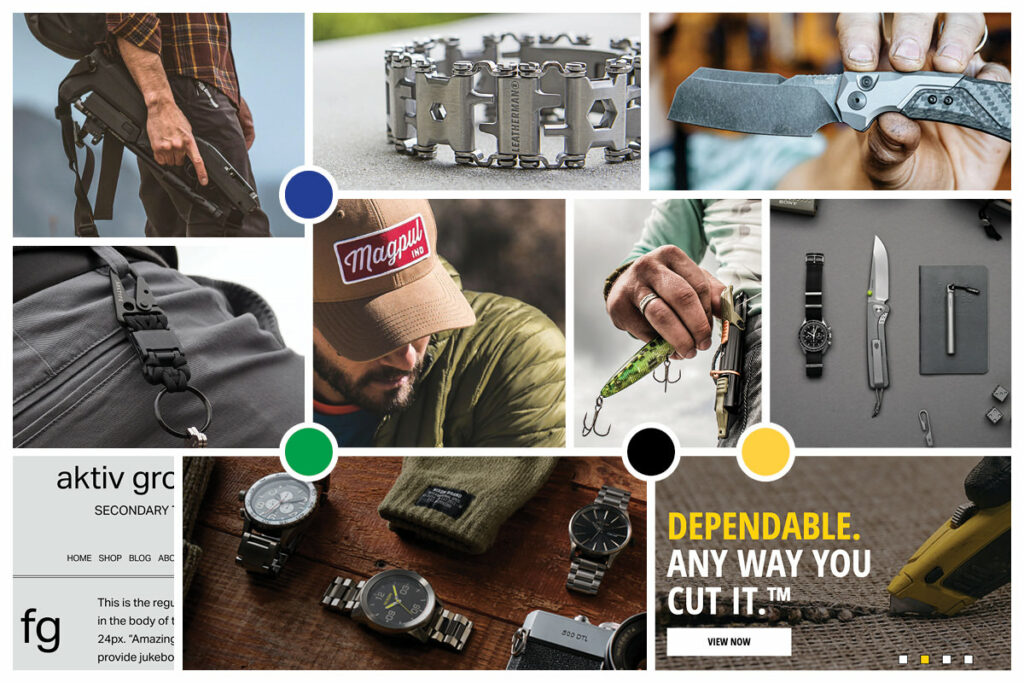
    We often referred to their platform as the Swiss army knife of aviation. This led us to a brand parallel of: Everyday Carry.

    Everyday Carry (EDC) is a culture of people who invest in and share the essential items they carry with them daily, oftentimes depicted in the form of “pocket dumps.” Pocket knives, multitools, mini flashlights, keychains, wallets, and lately, masks, are presented for their utility, reliability, and design.

    This internet-driven community of people (mostly men, just like Air Tractor’s audience) are true enthusiasts and always on the hunt for the next item that will improve their EDC loadout. Manufacturers of these products have invested heavily in sophisticated marketing and branding. Everyday Carry provided us an entire ecosystem in which to seek inspiration for our evolution of the Air Tractor brand.

    The Air Tractor airplane is tough, sleek, and reliable. And like precision tools carried day after day for decades, Air Tractor airplanes are always up for the challenge.

    Earl’s Rib Palace was a quickly identified brand parallel. If you’ve ever been to one of their restaurants, you’ll quickly pick up on their theme. It was best summed up to us as: Route 66.

    This brand parallel led us to classic American-made motorcycles and cars, vintage oil cans and gas stations, rusted license plates, and scrap metal. These are the detritus of the Mother Road.

    This not only fed our visual approach to the Earl’s brand identity but heavily influenced its tone of voice for a matter-of-fact, call-it-like-you-see-it brand personality. The Earl’s brand speaks like, and directly to, the blue-collar workforce in droves.

    Earl’s is middle America. Historic Route 66. Easy as pie. Okie. Smokey. And friendly above all. That’s what makes them Oklahoma BBQ.

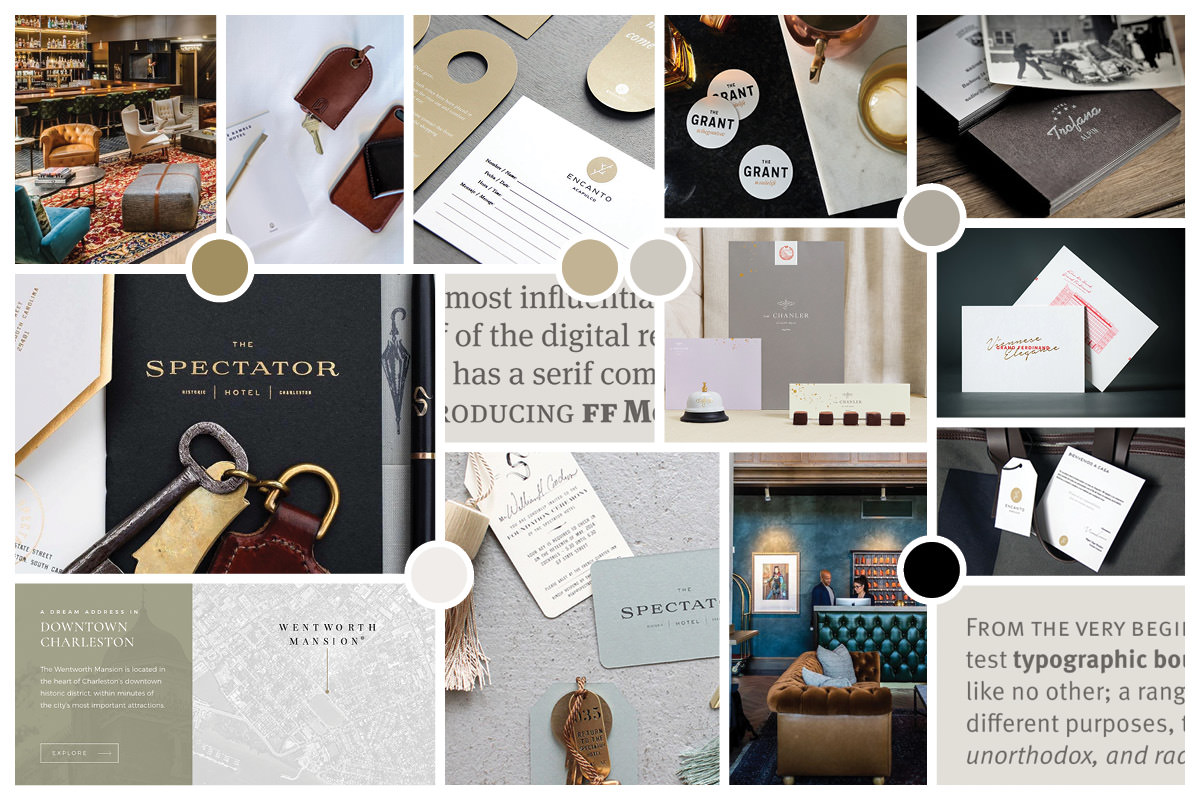
    BC Clark is a brand we’ve shaped and evolved across four decades. And in all that time we’ve strengthened the legacy they built with traditions and service to their community. BC Clark is an institution in the state of Oklahoma. It’s likely Oklahoma’s oldest brand extant.

    Elevating the BC Clark brand identity has been an ongoing effort. And we continue to re-tool and refine their brand for future success. One of our recent efforts was selecting the jewelry retailer’s brand parallel: Boutique Hotels.

    Because of their rich history, presence in urban areas, and high-touch physical experiences, it was a natural fit for BC Clark. Boutique hotels design every last detail and touchpoint for delight. Fads come and go. But exceptional experiences never go out of style. They will always be relevant. They will forever differentiate.

    This is what now inspires us to focus more attention on the customer experience for this high-end luxury retailer.

    When we approached our own rebrand in 2018, we pulled out the same toolkit we use for our clients. Though we were likely a bit more difficult to deal with, as each of us sees our brand differently, the process did not fail us.

    For our brand parallel, we wanted to find something that aligns with Traction’s qualities of people-friendliness, a welcoming spirit, and authenticity. At the same time, the parallel needed to show our technical and problem-solving strengths.

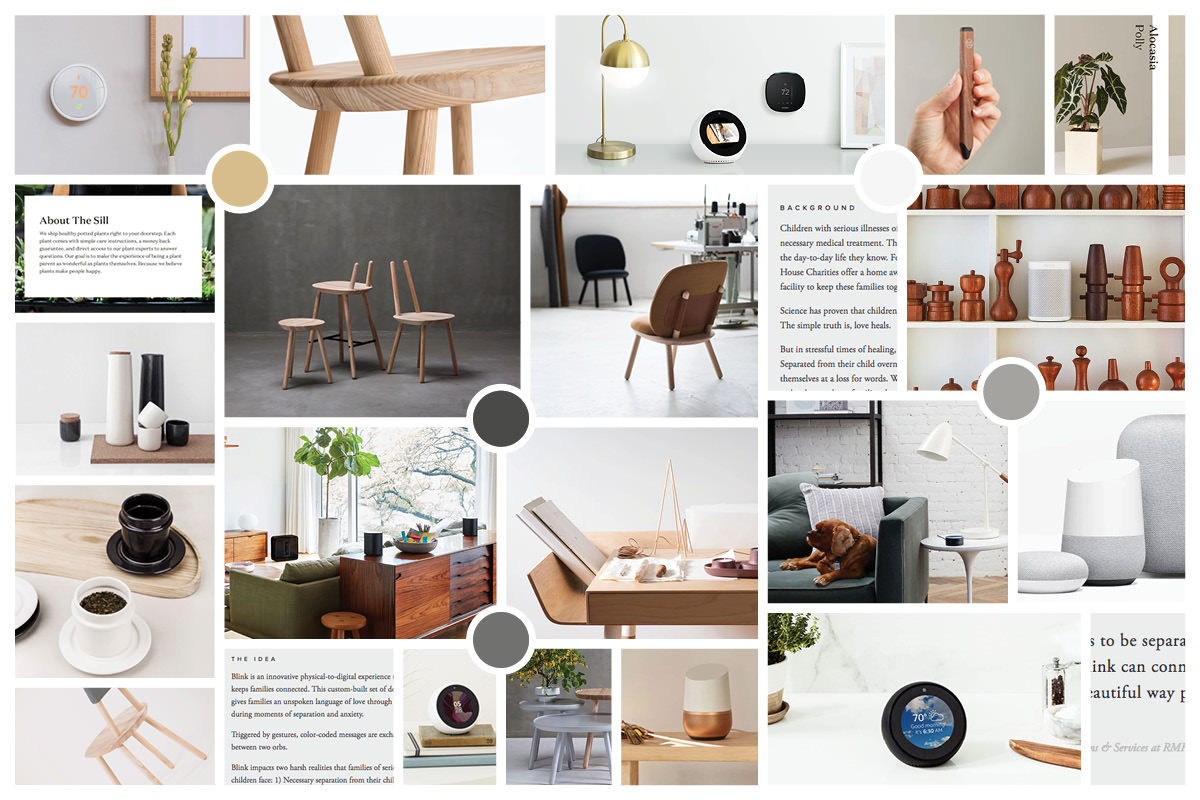
    We distilled multiple brand parallels pitched by various people on our creative team to arrive at a single business segment that just made sense of it all: Industrial Design (for the home).

    It’s a brand parallel that is technical, smart, well-thought-out, but also welcoming, warm, and authentic. It is human-focused and deliberate in both form and function.

    Common qualities we found in industrial design products were natural and gray colors, avoidance of sharp edges, and designs that invited user interaction and engagement.

    All other parts of the brand including color, typography, and photography all revolved around themes of home industrial design.

    The Brand Parallel is Ours

    Our brand process synthesizes a variety of methods and frameworks that have been used by the branding community for decades. We use many of the same tools and discovery methods as other brand strategists. And they work well.

    But this particular approach—the Brand Parallel—is ours. It is unique to us. And it is one of the pivotal steps in our process that takes a new or freshly reinvigorated brand to a new place that it might not have otherwise gone. It’s all a part of us helping to guide companies into Brand New Territoryº.

    Are you looking to take your brand new places? Thinking a Brand Parallel might inspire your business to journey beyond the competition? We’d love to help with that. Let’s talk shop.

You've made it to the beginning...

You've made it to the beginning...